TV Everywhere–A Pivotal Moment in the History of Television

Yesterday, the largest cable company in the nation, Comcast, launched a product called Fancast Xfinity.  Xfinity is the brand name of Comcast’s product, but the rest of the cable industry is planning to roll out something similar.  They’re part of a cable-industry-wide initiative known in the industry as “TV Everywhere.” The point of this initiative is actually to kill online TV and make sure people keep paying their cable subscriptions.

Thirty years from now, if Americans are still tied to their local cable companies, we will look back to yesterday as a pivotal moment in the history of television.  In the last year, consumers have seen the potential of canceling their cable TV and watching TV, in their living rooms, through competitive Internet services like Roku or Hulu.  Canceling cable would save Americans thousands a year they would spend on bloated cable TV bills.  But Xfinity is meant to lock Americans into cable TV subscriptions for the forseeable future, as the Wall Street Journal wrote yesterday.

Here’s the business plan for “TV Everywhere.”  Fancast Xfinity is a site that looks like Hulu but has different TV shows.  You go to the Xfinity site to watch (on only three authorized devices) some shows and movies available on cable TV.  Rather than making all these shows available to everyone on the Internet–like Hulu does, and like just about everything else online–the service is available only to Comcast subscribers in Comcast regions who subscribe to Comcast cable TV.

You’ll notice two things.

First, you can only watch Xfinity on the Internet if you pay your cable TV bill.  This is totally new.  It’s like saying you have to pay for cable TV to see pictures of funny cats online.  Why can’t you just pay for the Internet service?  The point of is to keep you from canceling cable and sticking with just Internet service.  It’s to keep you paying two bills.

Second, Comcast and Time Warner Cable are rolling out their services only in their own regions.  They’re doing so because they (naturally) don’t want to compete with one another.  They like the cable model–where each city has one monopoly cable operator.  You usually have the “choice” of one provider in any town–like Comcast,Time Warner Cable, Cablevision, or Cox.  And they’d rather not have to compete with each other on the Internet. In a Time Warner Cable region–you have to pay TWC for a cable TV subscription there.  Without competition from Comcast, which won’t provide you Xfinity.

So, in short, Comcast and Time Warner are trying to impose the cable TV model on the Internet.  And to keep you paying those high cable bills.

If they succeed, then we’ll look back on this moment years from now as the moment the cable industry stifled competition from online TV–and imposed the cable TV model on another generation.
AT&T’s Big Net Neutrality Statement: Yawn

AT&T sent a letter to the FCC and held a press conference to say …  the same exact thing they’ve said for 3 years.

In the letter, they said they don’t like net neutrality.  They said they think the FCC shouldn’t adopt a net neutrality rule with a fifth principle forbidding discrimination and ensuring neutral Internet access.  And they said–if the FCC must adopt a fifth principle–it should be a toothless fifth principle permitting AT&T to discriminate, but to do so “reasonably.”

But AT&T knows this is old news–covered by existing law.  Last year, AT&T’s head lobbyist (the author of today’s letter), said, on a panel I moderated, in fact: “The current [FCC] principles already deal with unreasonable discrimination.”   So what’s AT&T’s big announcement?  They’re proposing a law they think already exists, which net neutrality supporters (like Free Press and the President) would find incomplete.  (Free Press has already called the supposed compromise a “bait and switch.”)

The most interesting part is that AT&T is admitting it would like to discriminate (but “reasonably”).  This is the same company that thinks blocking Slingbox but not competing apps is reasonable discrimination and blocking Skype on the iPhone, until a recent change of heart, was also reasonable.  AT&T’s CEO in 2005 considered it reasonable to charge Vonage and Google to reach consumers, and told Business Week as much.

So, if AT&T wants to make news, I’d actually appreciate them explaining what kinds of discrimination they would like to engage in, and why they consider these discriminations reasonable–rather than threats to an open Internet.

Electricity and Light as the Killer App of 1900

Instructional article about electricity–unexpected killer apps, a basic infrastructure once believed a luxury, and the need for government policy in basic infrastructure for the benefit of Americans in all parts of the nation.

Give $50 to Free Press

I got an email from Adam Lynn, a researcher at Free Press, which I’m including below.  I’d encourage you to click here to give a little love this holiday season.  Give once or sign up to give monthly.

Free Press is a super-effective advocacy group fighting for an open and universal Internet, better journalism, and more local media.  They’re one of the more influential little groups you’ve never heard of.  Here’s a Washington Post article about its policy director.  Here’s a story about one of Free Press’s more well-known, high-impact cases (which I worked on while working at Free Press).

Free Press takes no money from corporations–just foundations and individuals like you.  And it’s stocked with committed, brilliant, hard-working folks.  They’re very impressive.  Adam Lynn, for example, is an amazing researcher, who proved himself to me as worth dozens of highly-paid white shoe lawyers charging $300/hr.

And Free Press is no frills–your money goes to (modest) salaries, not mahogany boardroom tables.  A top corporate lobbyist once came to the Free Press offices to negotiate something and asked, “All your legal filings and research papers, and just this small office… with Ikea furniture?”

May I suggest three formulas for how much you should give.

1. Imagine the corporate lawyers and lobbyists hired to fight Free Press and to undermine your consumer and citizen rights.  Send to Free Press enough money to cover one hour of one lawyer’s time.  That could be between $250 and $700.

2. Follow these tips by Adam for reducing your cable bill.  Whatever you save for one year, send half to Free Press.  If you save $50 a month ($600 a year), send $300; if you save $100 a month, send $600.  (Read the tips either way, even if you want all the savings.)

3. Cancel your cable bill altogether, and watch HD sports over the air and supplement with online TV like Netflix and AppleTV.  According to the NYT, that could save you $1,600 a year.  Send just one year of those savings over to Free Press, which is fighting to ensure your ability to watch online TV.

Or, without a formula, just send $50.  It’ll go to good use.

Here is the email.

Hello Friends and Family,
As most if not all of you are aware, I work for a non-partisan, non-profit consumer advocacy group called Free Press. I’ve been with them for more than three years now.  We hit a bit of rough patch this year. As I’m sure many of you have.  This is partly due to the fact that we accept no money from companies and thus maintain complete independence on these issues.  A fact that is increasingly rare amongst non-profits, especially those working in DC.  In an effort to remedy this situation, everyone at Free Press is asking our personal networks to support them.  I’m hoping you can help by donating.  Let me just first say that similar to my work, I don’t take this request lightly.  This isn’t going towards first class travel, new office accommodations or anything like that. This money will be used to pay my modest salary.  (If you like me so much you don’t want to read anymore, just head here: http://bit.ly/7jS2a4)
Let me also say, I love what I do.   I believe in these issues we work on to my core.  I could spends hours talking to you about why your cable bill is too high, why you pay too much for Internet access, why you have only two choices for high-speed Internet or why your cell phone provider should be paying you to text message.  Ever since I came upon these issues in 2003, I have breathed them. I think about them in the shower, I dream about them. The federal policies that surround tv, radio and the Internet have shaped the world we live in.  Unfortunately, all too often these decisions are made hidden and without the public’s knowledge or consent.  This is what I work to change.  My job, in a nutshell, is the collection of knowledge.  I research, develop and compile every fact I can to illustrate the reality for consumers.  I then write filings to regulatory agencies and offer consumer’s side of the story. Many times these filings are the only consumer voice in these otherwise industry dominated federal proceedings.  You will not find them reported by any news outlet but they have a direct effect on your life (not to mention your back account). My coworkers then take this information I compiled, boil it down and get it out to the public. When appropriate, we email our supporters and ask them to file a brief comment as well and further bolster our case.
We currently have an opportunity to make some serious positive improvements to the communication landscape.  The next year will be a critical time in my world.  I will be right in the middle of it, taking on 100 billion dollar companies and trillion dollar industries. They will always have more money to spend but believe me, they’re worried and spending tons to make sure I don’t succeed.  When I submit a filing they spend anywhere from $10,000 to $250,000 employing lawyers to respond and many times their attempts are weak. The reason behind this is simple, I am simply illustrating reality.  As Ghandi said “First they ignore you, then they ridicule you, then they fight you, then you win.”
We are on the cusp. As friends and family, I hope you can donate something to this cause, my passion and what I believe to be our future. I can absolutely promise you that I will put every dollar to good use.  I am enormously grateful for anything you can provide.  If times are just too tough for you, please consider passing this along to others you may know who might be interested in supporting my work.  Also, a generous donor has offered to match any donations made by Dec. 31. You can donate here: http://bit.ly/7jS2a4
Thanks for hearing me out
Adam
P.S. I should mention that these donations go to the Free Press Action Fund, our lobbying arm and are not tax-deductible as charitable contributions or as business expenses under IRC §162(e). I would argue this is the money that is put to best use because it is used right at the heart of the problem.

Cable Industry Confused: It’s Not Their First Amendment, But Ours

The cable and phone industry keep making the offensive argument that the First Amendment belongs to them, not you–and that the First Amendment empowers them to stifle your online speech just so they can make more money.

This Wednesday, the cable industry’s head lobbyist gave a speech claiming that Net Neutrality would violate the First Amendment. According to the NCTA’s Kyle McSlarrow, cable companies have free speech rights, while Americans (like you) don’t have rights to access or upload content on the Internet.

And Net Neutrality — a rule that would protect Internet users from cable and phone efforts to censor you online or to discriminate against your favorite Web sites — would abridge the speech rights of phone and cable companies.

Just repeating his argument shows how silly — and offensive — it is. McSlarrow specifically said that cable companies would “speak” by offering priority-treatment to some Web sites that pay cable companies more, at the expense of other sites that don’t pay them. Really. (It’s amazing what a 2-million-dollar lobbying salary will do to a man’s reason.)

He also said two things that directly contradicted one another (nothing new for phone and cable reps). He said (1) Net Neutrality is unnecessary because cable companies would not affect Internet traffic, let alone block it; and (2) Net Neutrality is “forced speech,” because it forces cable companies to carry speech they would, in fact, otherwise block or affect. Which is it? Will cable companies block speech (once again) or will they not?

And, in fact, his industry lost this same argument about the First Amendment in a major FCC decision just last year, rendered against his largest member company — Comcast — under a Republican Chairman, with a bipartisan vote.

But I want to focus on a particular insult to all Americans whose ancestors are human beings, not cable corporations. He said, “There is plenty of case law about instances of speech compelled by the government – ‘forced speech’ — that suggests such rules should be scrutinized closely.”

Let me tell you about this Supreme Court case law. It applies generally to humans, not cable corporations. You can force the speech of corporations, not humans, regularly. We “force” corporations to “speak” and disclose “material information” to investors. We can force corporations to disclose the side effects of prescription drugs or the trans fats in potato chips. We can force them to print Surgeon General’s warnings.

On top of that, we can “force” cable companies to carry local broadcast stations. The Supreme Court said so in a case called Turner, which rejected the cable industry’s same, repeated “forced speech” arguments. But this week, McSlarrow seems to forget that his industry lost Turner, and he is pinning his Net-Neutrality hopes on a few sentences in that case. Good luck with that.

But, in turning to the forced speech cases the cable industry didn’t lose, you see how offensive McSlarrow’s argument really is. The leading forced speech decision in the Supreme Court involves a person, not a cable corporation. That person was a grade school student — a Jehovah’s Witness.

During World War II, Jehovah’s Witnesses refused to salute the flag for religious reasons. They thought the pledge was Nazi-like, an arm raised akin to the Third Reich’s salute. And Witnesses were familiar with the Nazis. Nazis banned their movement in 1933, killed one-third of them, and persecuted up to 97% of them in Germany. (The story is in this book.)

But Americans misinterpreted the Witnesses’ motives, and thought they were unpatriotic, if not pro-Hitler. In West Virginia, 500-some taunting citizens forced some Witnesses to drink castor oil and roped them up and then paraded them through town. In Wyoming, five Witnesses (two women) were beaten by a mob. In Arkansas, two Witnesses were shot, four hospitalized after being beaten with pipes and screwdrivers. In Illinois, vigilantes pulled a Witness from his car, draped an American flag over his hood, and (when he refused to salute the flag) slammed his head into the hood for nearly half an hour while the police chief looked on.

During all this, West Virginia passed a law aimed at Witnesses, requiring all students to pledge allegiance to the flag, under penalty of expulsion for the child, fines and jail time for the parents. The Witnesses offered another pledge, declaring “allegiance and obedience to all the laws of the United States that are consistent with God’s law, as set forth in the Bible” and “respect” for the flag, “a symbol of freedom and justice to all.” But that wasn’t good enough for the state of West Virginia.

The Supreme Court struck down this law, for forcing the speech of children and parents, against their personal convictions. Other cases follow this logic.

The cable companies are trivializing the judicial freedom protected in those cases.

They’re not school kids. They’re huge, billion-dollar, profit-maximizing companies whose lobbyists dominate Washington, DC.

They don’t want to express their deep personal or religious convictions. They want to block and control speech. They want to determine winners and losers on the Internet. They want to break the Internet. They want to break your Internet, not theirs. And, to do so, they’re raising a First Amendment argument based on protections for forced-speech and freedom of conscience.

Their argument is just plain offensive.

[Cross posted at SaveTheInternet.com]

Net Neutrality and the 21st Century First Amendment

I wrote a long, introductory post about the First Amendment and network neutrality at Balkinization.

Ed Baker, We’ll Miss You

Edwin Baker passed away yesterday.

I join others in lamenting the loss.

He was a personal hero of mine, for his rigorous scholarship and intellectual honesty.  He became a friend because of his generosity, humor, and just deep kindness.

I read his scholarship during my third year in law school, while writing what became my first law review article.  My scholarship is still greatly influenced by his work. As were my career decisions–to become a law professor and First Amendment advocate.

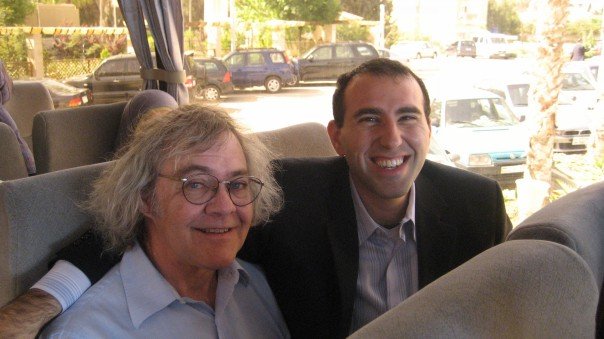
Ed and I later met and became friends.  We once both went to Amman, Jordan, to give lectures to Jordanian journalists about the American First Amendment, journalism, and civil society.  There is a picture of Ed and me in Jordan.  I am sitting next to him on a bus with my arm around him as we are heading to the Dead Sea.  We’re both smiling, but I’m smiling like a giddy little kid on his way to open Christmas presents.  I wrote this caption to the picture when I posted it on Facebook: “C. Edwin Baker is one of my heroes. I got to hang out in Jordan eating lamb chops, seeing ruins, and chatting about the First Amendment with Ed. Most of the pictures are of ruins. But yes, I was this happy.”

And now I feel the opposite of that, about that sad. It’s a great loss.

I’ll miss calling him to discuss drafts of papers or recent policy initiatives.  And I’ll miss looking forward to his next article or next book or to the next time he advises his friends in the public interest media advocacy community.  (He was a hero to us all…)  And I’ll miss seeing him for lunch in New York City, when I visit.

So, in short, like so many others who had the benefit of Ed’s generosity, kindness, honesty,  genius, I’ll miss Ed Baker.

Note, Ed’s sister provided this comment:

A public Memorial Service for Ed Baker will be held on Jan. 31, at 2:00 pm in the Moot Court Room at Cardozo Law School of Yeshiva University (5th Ave. at 12th Street).  There will be a reception in the lobby following the Memorial.  His cremated remains will be buried privately at a later date in the Baker family plot in Madisonville, KY.

Net Neutrality, “TV Everywhere,” and Other Cable Industry Assaults on Open Television

As I wrote on Monday, this holiday season may finally be time for millions of Americans to cut the cord on cable TV and shift to watching TV over the Internet and over the the air.

Already, only half of your time in front of the TV involves cable channels–the other half comes from free over-the-air channels like ABC and CBS (which now broadcast in digital and high-definition) and from the Internet.  With services like Netflix, Hulu, and iTunes, and some whiz-bang consumer electronics devices, supplementing that over-the-air TV with Internet TV is becoming easy and cheap–even if you want to watch the Internet on the flatscreen in your living room.

The CEO of Roku–a device that streams movies and shows from the Internet to your TV screenshas stated, “Our goal is to have everyone cancel their cable subscription.” And, today, with more people watching Hulu.com than watch many channels on cable TV, and with over-the-air TV providing high-definition channels, at least some people–if not everyone just yet–will cut the cord on cable.

While not everyone will “cut the cord” on cable, some will.

As a result, Internet TV could actually inject much-needed competition in a TV market long dominated by cable companies. Having more competitors in the game would lower prices, increase innovation, and create new job opportunities for entrepreneurs in the businesses they build. More importantly, with Americans watching Internet TV on their living-room TV television, TV becomes more democratic. Users would have more choice for speech and news.  They could more easily share and tag video, and even produce their own channels without having to negotiate with and get a special deal from a cable operator.  The cable operator would no longer be the gatekeeper of television.

Cable companies (of course) don’t want this threat of competition. The New York Times recently reported: cable companies “are trying to make sure people have a reason to keep paying hefty cable bills.”

Soon Comcast will be the first cable company to launch perhaps the industry’s boldest tactic yet in that fight, called TV Everywhere in the industry (which Comcast will market as Fancast Xfinity).

They won’t go down without a fight.

In fact, cable companies have spent many years fighting the emergence of Internet TV.

Let’s review the three previous tactics, all of which have resulted in consumer outrage, draft legislation, and/or Federal Communications Commission proceedings.

1. Network neutrality.

Cable companies have used their position as providers of Internet access to block (or threaten to block) technologies for online TV. Last year, the FCC had to order the largest cable company, Comcast, to stop blocking an Internet technology used by online TV distributors providing high-definition TV. The FCC concluded Comcast had an obvious anti-competitive motive. Since the early years of the Internet, cable companies would use their control of Internet access to discourage online TV. A cable CEO in 1999 declared he didn’t get into the cable business to “have the blood sucked out of the vein” by Internet TV. After several bills and some FCC enforcement proceedings, the FCC has moved towards adopting a rule.

2. Cap and metering.

While most Americans are used to paying a flat price for “all you can eat” Internet service, cable companies are experimenting with charging consumers based on consumption. Some usage-based pricing models might not always gouge consumers. But Time Warner Cable announced a trial of a pricing schedule that appeared targeted directly at people watching high-definition TV online. (You’d pay an arm and leg to watch Twilight!) Public outcry–which included draft legislation in the House and Chuck Schumer’s leadership in the Senate–delayed some trials, but the cable (and phone) companies continue testing this idea.

3. Control of cable set-top boxes.

A set-top box is the device sitting next to your TV which you connects your cable cord to the TV so you can watch cable channels on your TV. Chances are you rent this from your cable company at some non-competitively high price because of the lack of competition.  In fact, there is no competitive market in set-top boxes. With competition, hundreds of consumer electronics companies could produce innovative boxes with cutting edge features. In addition, device makers like Apple and Roku or Tivo could integrate the cable TV offerings into one user-friendly interface, a point even the FCC has raised. (Imagine having to use your iPod only for digital downloads and to switch to a CD player for CDs; or imagine having to use the cable interface and to switch to an antenna to watch over the air television.) Congress has twice passed legislation requiring the FCC to ensure competition in set-top boxes. To its credit, the FCC has admitted its earlier, cable-friendly, attempts were a big big failure…

And now comes battle tactic number four, just in time for the holidays. And like the previous cable industry tactics, government officials should be concerned.

4. TV Everywhere.

TV Everywhere is a simple concept. Cable companies like Time Warner Cable and Comcast are making deals with their friends, the content companies like TBS and TNT, to lock up programming behind a wall. To get past this wall and watch the TBS, TNT (and most other) shows on the Internet … you have to be a cable subscriber. So, go ahead, try to cancel your cable TV bill. Try to watch TV online. Soon enough, unless you’re a cable subscriber, you’ll find you’ll have nothing to watch online. You can’t even buy an online-only subscription.

If you think TV Everywhere seems “anti-consumer” and “anti-technology”, you took the words right out the mouth of Disney’s CEO.

TV Everywhere is actually a pretty odd business concept.

It would be as though all the newspapers got together and decided that the only way to read newspapers online was to prove you were a home subsciber.

Or, it would be as though cable companies–competing with satellite TV–only let you watch TV shows on satellite TV if you were also a cable subscriber.

As an observor told Reuters: “It seems like a system designed to prevent the emergence of competitors.”

Exactly.

And it’s the latest tactic to keep competition at bay and maintain the cable companies’ control over your television.

As with tactics 1-3, TV Everywhere signifies the cable industry thrashing around to kill the biggest competitive threat they’ve ever faced–innovators on the Internet.

And as with tactics 1-3, the government has a role to promote competition and free speech, even at the expense of powerful special interests like Comcast and Time Warner Cable. The government should take that role seriously.

And as with tactics 1-3, consumers should make their voice heard.

The Holiday Season of Internet TV. Time to Cancel Your Cable Subscription

This holiday season is shaping up to be the season of Internet TV.  Finally the time has come for Americans to watch TV through the Internet, and not just on laptop screens but on living room flat panel HD TV screens .  Devices and services like AppleTV, Roku, Boxee, and Netflix let you watch popular movies and TV shows directly on your TV screen.  To the delight of TV viewers but the annoyance of cable companies, it is time for many Americans to give themselves or loved ones a long-hoped-for gift.  For them, it  its time to cancel their ever-more-expensive cable subscriptions.

For decades, Americans have been forced to accept high prices and little choice for TV.  This is because of limited competition–in most areas, just a local cable monopoly, satellite, and maybe the local phone company.  But with an open Internet (and free over the air broadcasting), Americans can route around the cable gatekeepers and watch TV shows, films, and amateur video online.  And technology and content companies can go straight to users.

Americans already watch TV over the Internet.  Hulu.com airs shows from NBC, ABC, and Fox, and has over 40 million viewers a month, more than all of Time Warner’s channels, including CNN, TBS, and TNT.  Through the Internet, you can watch BBC, CNN, and PBS.  Services like Netflix‘s revolutionary service, Amazon VOD, iTunes, and the announced Sony Online are proliferating.  Through Miro, an open sourced free application, you can watch hundreds of channels.   You could also watch, or soon watch, Youtube, Vimeo, Babelgum, Rowdy Orbit, My Damn Channel, Funny Or Die, Vuze, and Roku box’s ten-channel service. and other outlets.  (Hoping to get some recommendations in the comments…)  And software like Boxee (which is free) can make all this easy and convenient.

Taking it one step further, Americans can watch any of these services on their television screens.  Look at this Netflix page listing some of the devices supporting Netflix’s Internet delivery of movies and shows to your TV.  Internet access is being built directly into Wi-Fi enabled flatscreen televisions from Vizio and Sony Bravia, BluRay players, gaming consoles like the Sony Playstation and Xbox, and online TV boxes like AppleTV and Roku.

Some of these devices and services are already in millions of family’s homes  for other reasons–like video games and HD DVDs.  Otherwise, they pay for themselves–if a customer cancels the monthly cable TV bill, that  saves many hundreds of dollars each year.  That comes in handy any time, not just holiday season.

This.  Is.  Awesome.

And it’s probably why more than one-in-three Americans is considering cutting the cord on cable TV in the next five years

But for cable companies like Comcast, Time Warner Cable, and Cox, this is  … not awesome.

Cable companies would rather you not cancel your cable TV subscription and “that you pay them 70 bucks a month for maybe a lot of channels you don’t use.”  And they are used to owning your living room television.

So cable companies are beginning to sour like the Grinch.  The two largest cable companies, Comcast and Time Warner Cable, have been pressuring TV programming networks to keep their shows off the Internet.

Comcast’s COO told the New York Times that Comcast needs a model to protected its “core business,” so the Internet is not a “destroyer of wealth.” While NBC was renegotiating its carrier deal with Comcast, Hulu’s content partners (including NBC) asked Hulu to block access for Boxee users, as Boxee lets users watch Hulu on their TV screens.

In fact, the Comcast-NBC merger has been called  “a defensive move to some extent by Comcast,” as “Comcast is eager to diversify its holdings amid an encroaching threat from online video” and other sources.

Time Warner Cable’s CEO has even said, “Guess what? We do mind,” that networks put their shows online for free; and if networks continue putting shows online “we have to intervene at some point.”

So consumers want their online TV.  They want to watch shows through any device at any time, and are willing to pay for it. And innovative competition is beginning to meet that demand.  Cable companies don’t want the competition.  And they’ve had a questionable history in their dealings with online TV competition–including a major net neutrality violation.

Considering the cable companies’ reactions, policymakers in Washington should monitor the cable companies’ response to the threat of online TV.  For the sake of millions of Americans this holiday season, policymakers should make sure online TV can compete fairly with cable TV.  This way, thanks to DC, Americans could buy and use new TV services.  And, if they wish, to cancel old ones and ring in the New Year cable-free.

Stories: Comcast-NBC’s Effect on Online TV and Net Neutrality

I spoke with the Washington Post about online television and a cable-industry initiative called TV Everywhere.

Indeed, Marvin Ammori, a media law professor at the University of Nebraska, warns that the TV Everywhere model could edge out small competitors who would provide alternatives to the cable subscription model. Ammori, an advisor to public interest group Free Press, said his group and others will urge regulators to closely scrutinize TV Everywhere’s impact on consumers and competition for new video companies.

“TV Everywhere is an effort by the old guard, the incumbent cable industry, to make sure change doesn’t come to the television,” Ammori said. “And their way of doing that is to make sure you can’t cancel your cable TV service and enjoy the dream of watching your favorite shows through new competitors like Hulu, Roku and Vuze.”

I also spoke with Wendy Davis at MediaPost about how the potential merger emphasizes the need for strong net neutrality rules.

The concern is that Comcast could use its status as the country’s largest Internet service provider to privilege its own online content, says Marvin Ammori, a University of Nebraska law school professor who advises Free Press. For example, Comcast could theoretically prioritize traffic to NBC.com at the expense of visits to other sites.

“This is yet another example of why we need a very firm and very strong net neutrality rule,” Ammori says.